
Alexandria Directory Years and Shelves
Alexandria city directories survive through several repositories, not as one complete online run. The earliest digitized lead is a 1906 volume from the New York Public Library, now presented through Google Books. A federal historic-district nomination documents later publishers and dates, while local and state libraries provide the best path to volumes that are not searchable on the open web. A useful search log should name the publisher, year, repository, and page, since a date range in a catalog does not prove that every year survives.
| Collection | Years | Where Held | Access |
|---|---|---|---|
| Digitized Alexandria directory | 1906 | Google Books, original at New York Public Library | Online scan |
| Piedmont Directory Co. | 1912, 1914, 1918, 1921 | NPS nomination reference trail | Repository check |
| Interstate Directory Co. | 1929, 1934, 1938 | RPL and genealogy holdings | Ask for year and page |
| C.B. Page | 1940, 1942, 1943, 1945, 1947 | RPL reference trail | Staff request |
| R.L. Polk | 1931, 1954, 1955, 1957, 1959, 1960, 1961-1970 | RPL reference trail | Confirm each volume |
The St. Louis County Library holdings list confirms grouped Alexandria and Alexandria/Pineville runs through 1960. It does not replace a local shelf check. No public full-text run or verified reverse-directory collection was found, so missing years must be reported as gaps rather than assumed publication breaks.
Alexandria Directory Publishers Changed
Publisher changes matter because page layouts, abbreviations, and indexing habits can change with the company. The Downtown Alexandria Commercial Historic District nomination preserves the local sequence. It is evidence of sources used for the nomination, not proof that a particular person appears in every cited volume.
| 1906 | Earliest confirmed digitized scan. |
|---|---|
| 1912-1921 | Piedmont appears in four years. |
| 1929-1938 | Interstate and Polk runs overlap. |
| 1940-1947 | C.B. Page supplies five dates. |
| 1954-1970 | Polk becomes the main documented publisher. |
That sequence is one of Alexandria's strongest directory stories. Photograph the key in each volume before decoding a line. A mark learned from a Polk book should not be carried into a Piedmont or C.B. Page volume without checking.
Alexandria City Directory Research Stops
The Alexandria Historical and Genealogical Library at 503 Washington Street holds books, periodicals, family histories, and genealogy material. Ask for a defined surname, year, street, and page image. Current public hours were not confirmed, so call 318-487-8556 before visiting.
The State Library Louisiana Collection includes historical city directories, telephone books, maps, newspapers, census resources, parish microfilm, and vertical files. LSUA adds family papers, photographs, yearbooks, newspapers, and court ledgers. The LSUA Archives welcomes researchers by appointment, Monday through Friday, 9:00 a.m. to 4:00 p.m.
The City of Alexandria department directory is a modern office-routing page, not a historical resident volume.
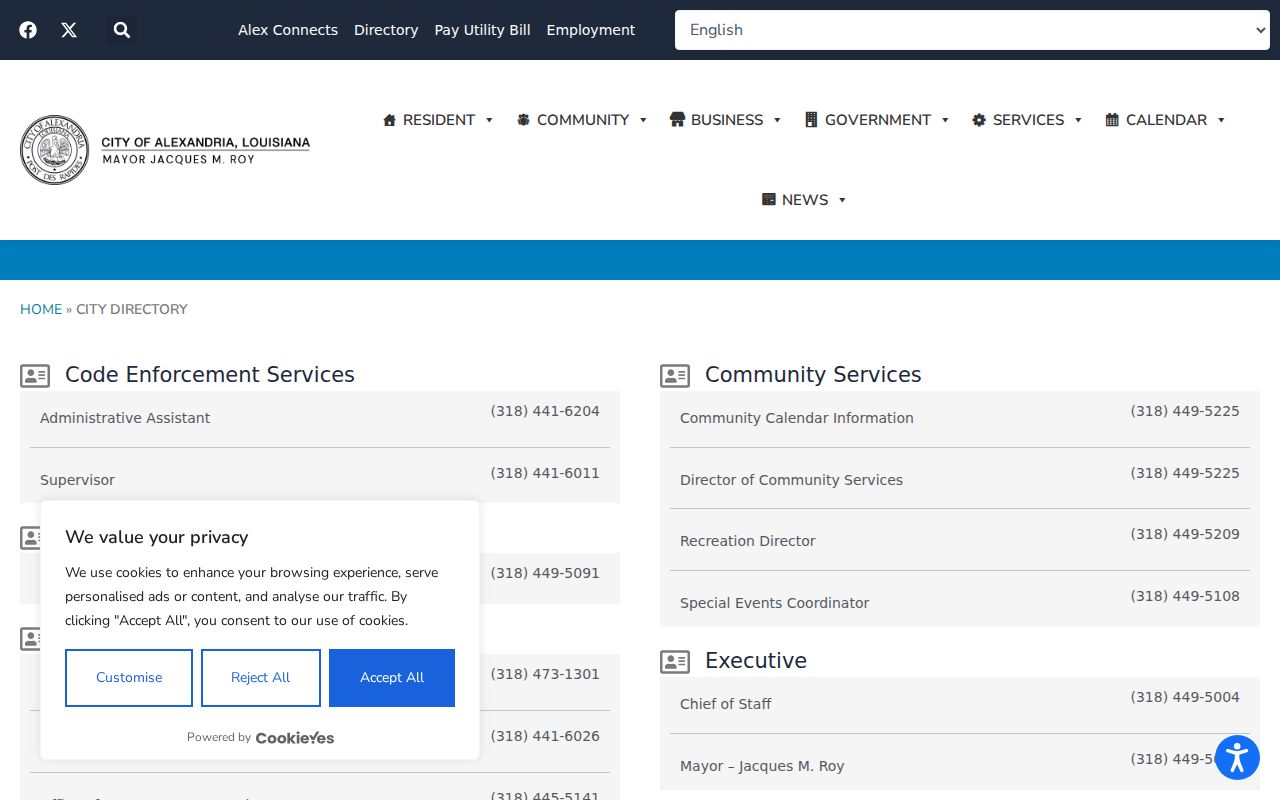
Use it to reach the right custodian when an old address leads to a permit, planning, or clerk record.
Read Alexandria Directory Entries Carefully
A directory line is a dated clue. Copy it exactly before interpreting it: name spelling, household notation, trade, street number, street spelling, and every symbol. The 1906 scan exposes section markers and occupational or street text, but no named sample line or key was validated.
| Name | Preserve spelling, initials, and household notation. |
|---|---|
| Trade | Copy the role and business, but do not treat it as a home address. |
| Address | Record number and original street spelling. |
| Residence mark | Decode letters only from that volume's key. |
| Citation | Keep title, publisher, year, page, and access date. |
- Criss-cross directory
- A book arranged by street and house number. No digitized Alexandria run was confirmed.
- Householder index
- An address-ordered list that may identify the listed adult, not every occupant.
- Abbreviation key
- The volume's own legend for short forms.
A business line does not establish where its officer lived. A directory cannot prove that a person remained after publication. Modern verification belongs in the Alexandria resident lookup.
Alexandria Newspapers Fill Directory Gaps
The Rapides Parish Library newspaper archive includes 323,284 pages of Alexandria Daily Town Talk from 1901 through 1966, plus 81,805 pages for 1967 through 1970. Weekly Town Talk contributes 31,672 pages, while other Alexandria titles extend the trail.
Search the advanced interface by surname, street, organization, and date. OCR can garble initials and street suffixes. Inspect the image, then record publication, date, page, column, and spelling. An obituary or social notice can explain a directory change without becoming current residence proof.
Note: No standalone official Alexandria obituary index was located; request an image and citation from RPL or the genealogical library.
Place Alexandria Directory Streets
The Downtown nomination describes a boundary using 2nd, Jackson, Beauregard, 4th, 5th, 6th, Murray, Washington, and Lee streets. That frame can narrow a vague downtown reference, but it does not prove that a household lived within the district.
Start with the printed spelling and year. Check the street index, then compare an Alexandria Sanborn map. Editions found in research span 1885 through a set dated 1928 to March 1951. Sanborn sheets can show street numbers, building footprints, use, materials, and nearby structures. They cannot identify an occupant.
Only then compare a city map, plat, deed reference, or assessor parcel. This guards against false matches caused by changed numbering or short forms. If old and modern addresses cannot be bridged, record the gap.
Alexandria Records Beyond Directories
The Alexandria City Clerk is the municipal custodian.
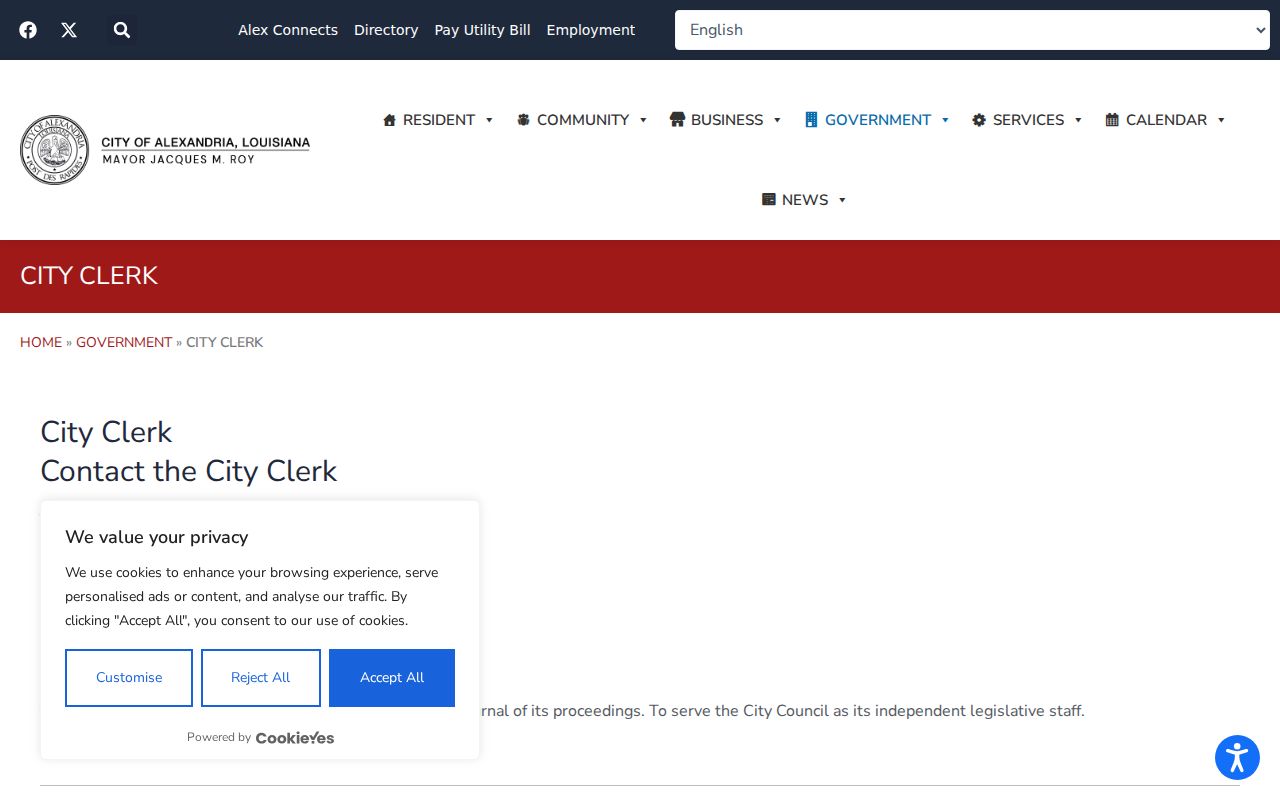
A written request should name the record, date range, department, and copy form.
The building permits page supplies forms and routing.

Permits can date a project, but cannot prove occupancy.
The Police Records Division has its own route.
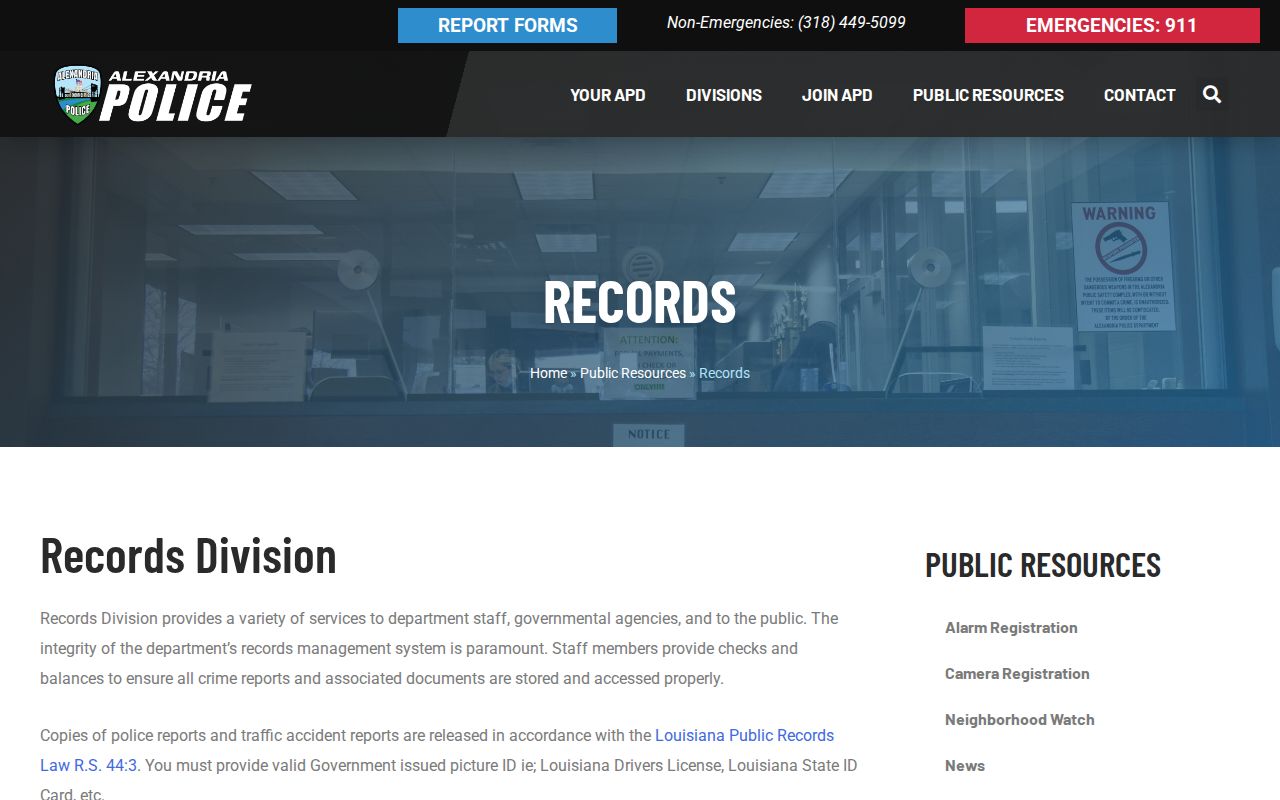
Respect redactions and protected material.
Alexandria City Court publishes schedules and contacts.
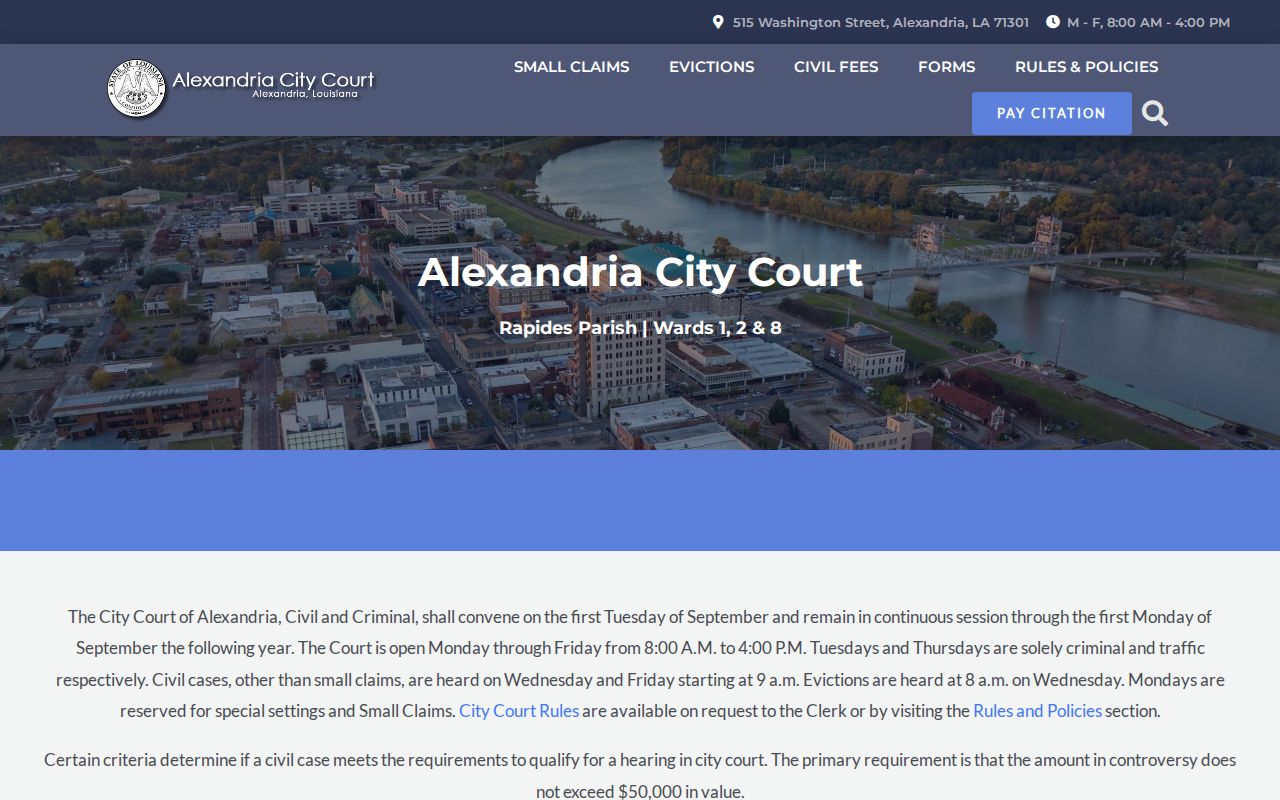
No public person-name search was verified, so contact the clerk with a name, range, and case number if known.
Trace Families Through Alexandria Directories
Keep each entry tied to its year. Pair directory snapshots with federal census schedules, publicly available through 1950 under the 72-year rule.
- Search a confirmed year for the surname and variants. Save the exact line.
- Move through adjacent volumes, logging address and household changes.
- Check street-order pages only when the book proves they exist.
- Pair the year with the nearest census using parish, ward, street, and cross street.
- Search newspapers and archives for a dated event that explains the change.
Disappearance can mean a move, death, missed canvass, changed surname, publisher change, or missing volume. It is not a conclusion. LSUA's Garden Club records, dating to 1926, and blueprint digitization show why a lead may live in a collection rather than a name index.
Keep a negative-search log when the person is not found. Record the repository, title, years checked, spelling variants, street forms, and whether a librarian inspected non-digitized material. The 1890 federal population schedules were mostly destroyed after a 1921 fire, so Alexandria city directories and newspapers can be especially useful around that census gap. Earlier census schedules also change in detail: schedules before 1850 generally name only the head of household, while later schedules may list each person, age, birthplace, marital details, work, and address depending on the year.
Do not merge sources merely because names resemble one another. A directory listing, census household, newspaper notice, club record, and deed each makes a different dated claim. When two records agree, cite both. When they conflict, preserve both spellings and dates until another record resolves the difference. This method makes the family trail reproducible and prevents a later researcher from treating an attractive guess as fact.